A Time to Keep

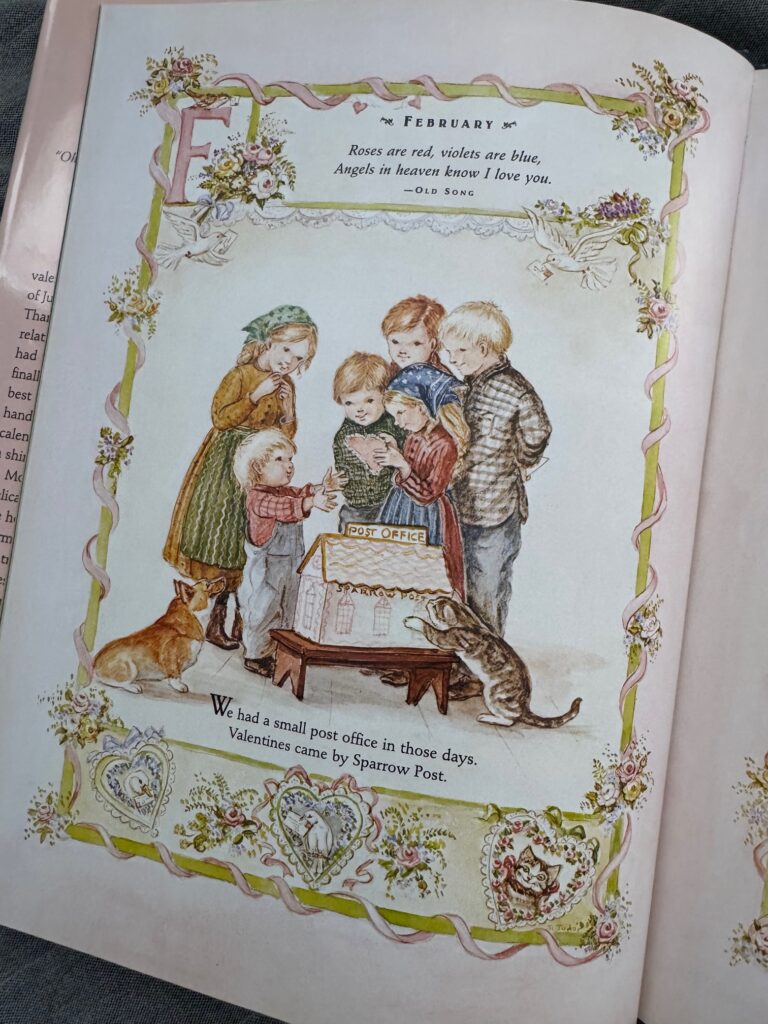
Earlier this week, I posted a photo on social media of a page from my favorite picture books, Tasha Tudor’s “A Time to Keep: The Tasha Tudor Book of Holidays.” I’ve revisited this book more times than I can count and when I opened it earlier this week to look at the February section, I was immediately pulled back in.

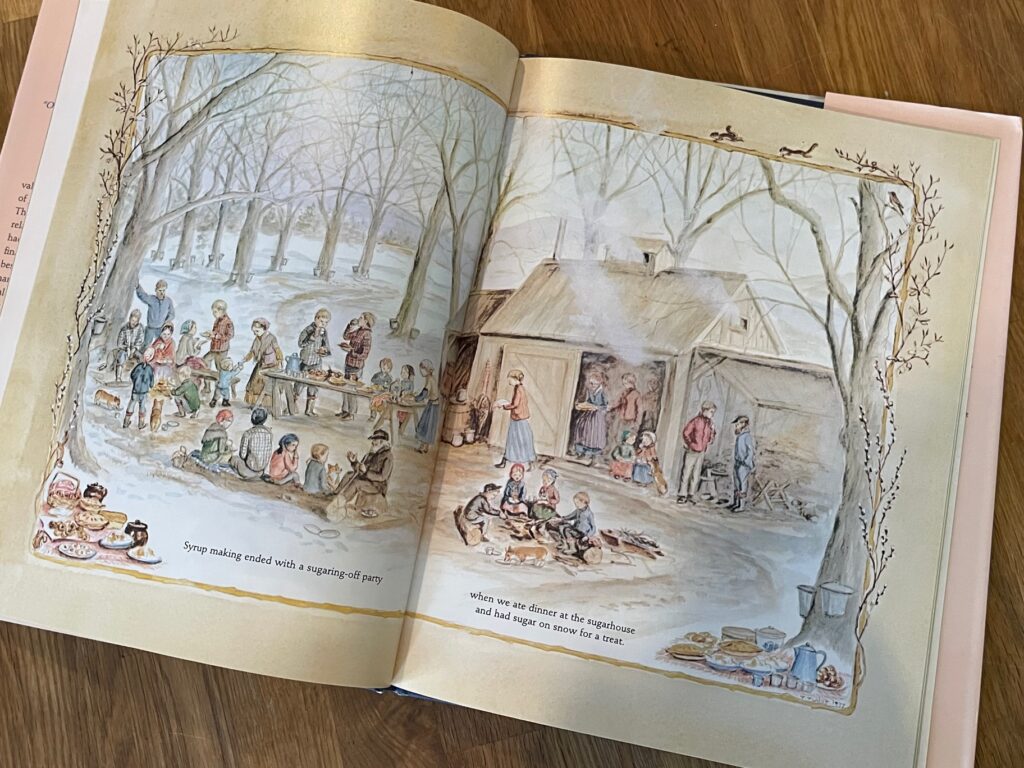
Tasha Tudor takes readers through the year, month by month. She makes the ordinary beautiful, special, and memorable. As a small child, I dreamed of climbing inside those pages, helping to make maple syrup, playing with the corgis, putting on plays in the carriage house, making candles for the upcoming year.

What I didn’t realize when I read this book when I was small, is that I learned from these pages that there is beauty in our own special traditions. They don’t have to be fancy or expensive; they just have to be meaningful to us. Celebrating these things as a family make us look forward to them.

While my family’s traditions look different than the ones in Tasha Tudor’s beautiful illustrations, I realize how important those rituals are to my family. I realize now that the way we talk about the year ahead and what we look forward to, stems from that book. Not that we are imitating what we see in the book, but rather that we look forward to our own traditions and how we make them special. I learned the value of tradition from those pages.

While I wouldn’t trade our traditions for someone else’s, I would still love to climb into that book and experience Tasha Tudor’s world. If you haven’t read this beautiful picture book, please check it out. It is honestly the most beautiful illustrations of family tradition (and if someone can figure out how to make a lit birthday cake float down a river like it does in the book, please share because I think I need to add that tradition).
Tasha Tudor’s “A Time to Keep”

One of my favorite childhood books that I still revisit is “A Time to Keep: The Tasha Tudor Book of Holidays.” For as long as I can remember, I’ve wanted to climb inside the pages of this book. The illustrations are beautiful. The story simply takes the readers through the year sharing how each month is enjoyed. Some months have holidays, some months don’t but they enjoy the enjoy traditions that are part of the season.

I reread the February pages this week. They celebrated Valentine’s Day with even the corgis receiving valentines. They made Washington pie on Washington’s birthday. I looked forward through the March pages. It’s sugaring season in the book and everyone is gathering sap from the sugar maples. They make syrup and eat out in the woods by the sugarhouse. The story is simple and beautiful, but I think what draws me in most is how Tudor is so good and showing the beauty in the ordinary, the beauty in the everyday life. I think I’m so drawn to this book because it’s grounding in a way, it shows the reader that their traditions (whatever they might be) are special. In our home, we don’t gather sap, nor do we have a sugarhouse, but we have our own traditions that are so special to us.

A few years ago, I learned that Tasha Tudor lived in Redding (please note this house was up for sale years ago and is not currently listed for sale – Historic Property for Sale: Tasha Tudor’s Childhood Summer Home in Redding (hamlethub.com). Tudor’s tale of “The County Fair” was inspired by a visit to the Danbury Fair (On the Children’s Shelf: Tasha Tudor’s Locally Inspired “The Country Fair” (hamlethub.com). My mom took me to the Danbury Fair when I was small but unfortunately, I was too young to remember it. So my only memories of that fair are through Tudor’s book. Once I learned of Tudor’s time living in this area, her books took on new meaning for me because I wonder about their local roots. I saw trees on my drive yesterday with the sap buckets attached and thought of the scene in her book.

While most of this book could take place anywhere, knowing that Tudor spent so much time in this area, I like to believe the book took place here. The illustrations are how I imagine our town (and surrounding towns) looked many, many years ago.